Breaking News



By Pa Modou Cham
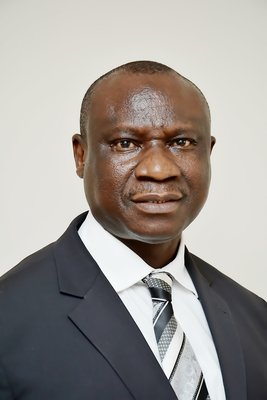
Governor of the Central Bank of the Gambia, Buah Saidy has announced a more optimistic economic outlook for The Gambia, with the Central Bank raising its forecast for economic growth in 2026 to 5.8 percent, as tourism, services, investment and remittances continue to support the economy.
Presenting the Monetary Policy Committee’s latest assessment, Saidy said the revised forecast reflects stronger-than-expected economic activity despite continuing global uncertainty.
“The Central Bank projects real GDP growth of 5.8 percent in 2026,” Saidy said, adding that the upward revision was explained by “continued expansion in services, tourism, construction, public and private investment, and sustained remittance inflows.”
The new projection represents a 0.1 percentage point increase from the Bank’s previous forecast.
The upgraded outlook follows provisional figures showing that the Gambian economy grew by 5.7 percent in 2025.
Saidy said the 2025 performance was driven by strong activity in tourism, construction, trade and financial services, together with private investment and remittance inflows.
“The Gambian economy continues to demonstrate strong resilience despite heightened global uncertainties and geopolitical tensions,” Saidy said.
The Central Bank’s Composite Index of Economic Activity also points to continued expansion through the second quarter of 2026.
The positive outlook is being reinforced by businesses.
The Bank’s second-quarter Business Sentiment Survey found that sentiment around production, capital expenditure and employment improved during the quarter, supported by stronger domestic demand, increased digital services and continued investment.
Saidy said businesses expect domestic economic conditions to improve, although they remain concerned about inflation, exchange-rate pressures and geopolitical developments.
One of the strongest pillars of the country’s external position continues to be remittances.
Private remittance inflows reached US$265.5 million in the second quarter of 2026, compared with US$219 million during the same period in 2025.
Foreign exchange market activity also increased significantly.
Aggregate foreign currency purchases and sales rose to US$773.7 million, compared with US$644.2 million in the first quarter.
Saidy said the increase was “underpinned by sustained private remittance inflows and project-related foreign currency disbursements.”
Despite stronger foreign currency supply, however, the Bank continues to see demand pressure, particularly from payments for imported food, fuel and construction materials.
The Dalasi remained broadly stable during the second quarter, although it depreciated marginally against major currencies.
The country’s export performance also improved during the quarter.
Exports increased by 21.9 percent to US$171 million, driven by higher re-exports and exports of edible fruits and oil seeds.
At the same time, imports moderated by 2.6 percent to US$413.5 million.
Saidy said the improvement was supported by “stronger exports,” although he cautioned that The Gambia remains heavily dependent on imports.
The country’s goods-account deficit narrowed to US$242.5 million, from US$284.4 million in the preceding quarter.
However, the overall current account deficit widened to US$34.6 million, or 1.3 percent of GDP, partly because of the seasonal decline in tourism-related services during the lean period.
Saidy said the country’s external position remains broadly stable despite the challenges.
“The external sector remains broadly stable despite persistent Balance of Payments challenges,” he said.
“Foreign exchange market activity strengthened during the second quarter, supported by strong remittance inflows and other foreign currency receipts.”
Gross official reserves stood at US$563.9 million at end-July, providing the country with a buffer against external shocks and exchange-rate pressures.
The stronger forecast is not without risks.
The Central Bank warned that geopolitical uncertainty and adverse weather conditions could weaken economic performance.
Saidy said delayed and uneven rainfall could adversely affect agricultural production and yields, with implications for domestic food supply, rural incomes, inflation and overall economic growth.
Global developments also remain a threat.
“Renewed escalation” in geopolitical tensions could increase commodity prices, particularly energy costs, while tighter external financing conditions could put additional pressure on vulnerable developing economies.
Still, the Governor struck a cautiously positive tone in presenting the MPC’s assessment.
“The growth outlook has strengthened,” Saidy said, while acknowledging that the economy remains exposed to external shocks.
For monetary policymakers, the challenge now is to preserve that growth momentum without allowing inflationary pressures to become entrenched.
That balance explains the MPC’s decision to maintain the policy rate at 14 percent while continuing to monitor developments closely.
The next MPC meeting will take place on November 25, 2026, with the policy decision to be announced the following day.