



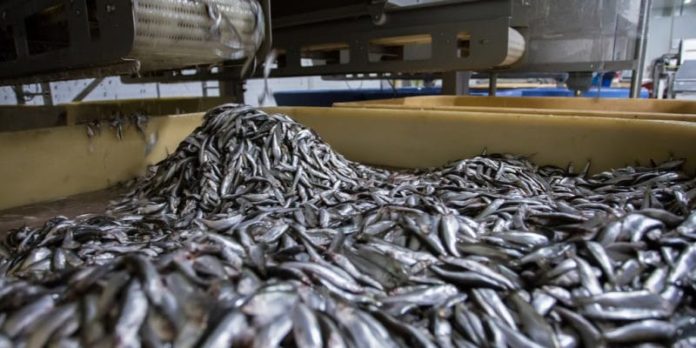
The Factories Turning West Africa’s Fish Into Powder
Share your love
Gunjur, a town of some 15,000 people, sits on the Atlantic coastline of the southern Gambia, the smallest country on the African continent. During the day, its white-sand beaches are full of activity. Fishermen steer long, vibrantly painted wooden canoes, known as pirogues, toward the shore, where they transfer their still-fluttering catch to women waiting at the water’s edge.
The fish are hauled off to nearby open-air markets in rusty metal wheelbarrows or in baskets balanced on heads. Small boys play soccer as tourists watch from lounge chairs. At nightfall, work ends and the beach is dotted with bonfires. There are drumming and kora lessons; men with oiled chests grapple in traditional wrestling matches.
Hike five minutes inland, and you’ll find a more tranquil setting: a wildlife reserve known as Bolong Fenyo. Established by the Gunjur community in 2008, the reserve is meant to protect 790 acres of beach, mangrove swamp, wetland, savannah, and an oblong lagoon. The lagoon, a half-mile (800m) long and a few hundred yards wide, has been a lush habitat for a remarkable variety of migratory birds as well as humped-back dolphins, epaulet fruit bats, Nile crocodiles, and Callithrix monkeys.
A marvel of biodiversity, the reserve has been integral to the region’s ecological health – and, with hundreds of birders and other tourists visiting each year, to its economic health, too.
But on the morning of 22 May 2017, the Gunjur community discovered that the Bolong Fenyo lagoon had turned a cloudy crimson overnight, dotted with floating dead fish. “Everything is red,” one local reporter wrote, “and every living thing is dead.” Some residents wondered if the apocalyptic scene was an omen delivered in blood. More likely, ceriodaphnia, or water fleas, had turned the water red in response to sudden changes in pH or oxygen levels. Locals soon reported that many of the birds were no longer nesting near the lagoon.
A few residents filled bottles with water from the lagoon and brought them to the one person in town they thought might be able to help – Ahmed Manjang. Born and raised in Gunjur, Manjang now lives in Saudi Arabia, where he works as a senior microbiologist. He happened to be home visiting his extended family, and he collected his own samples for analysis, sending them to a laboratory in Germany.
The results were alarming. The water contained double the amount of arsenic and 40 times the amount of phosphates and nitrates deemed safe. The following spring, he wrote a letter to Gambia’s environmental minister, calling the death of the lagoon “an absolute disaster”. Pollution at these levels, Manjang concluded, could only have one source: illegally dumped waste from a Chinese fish-processing plant called Golden Lead, which operates on the edge of the reserve. Gambian environmental authorities fined the company $25,000 (£18,000), an amount that Manjang described as “paltry and offensive”.