



Afreximbank Chief George Elombi Pushes Africa From “Vision to Execution” Under AfCFTA
Share your love
By Pa Modou Cham
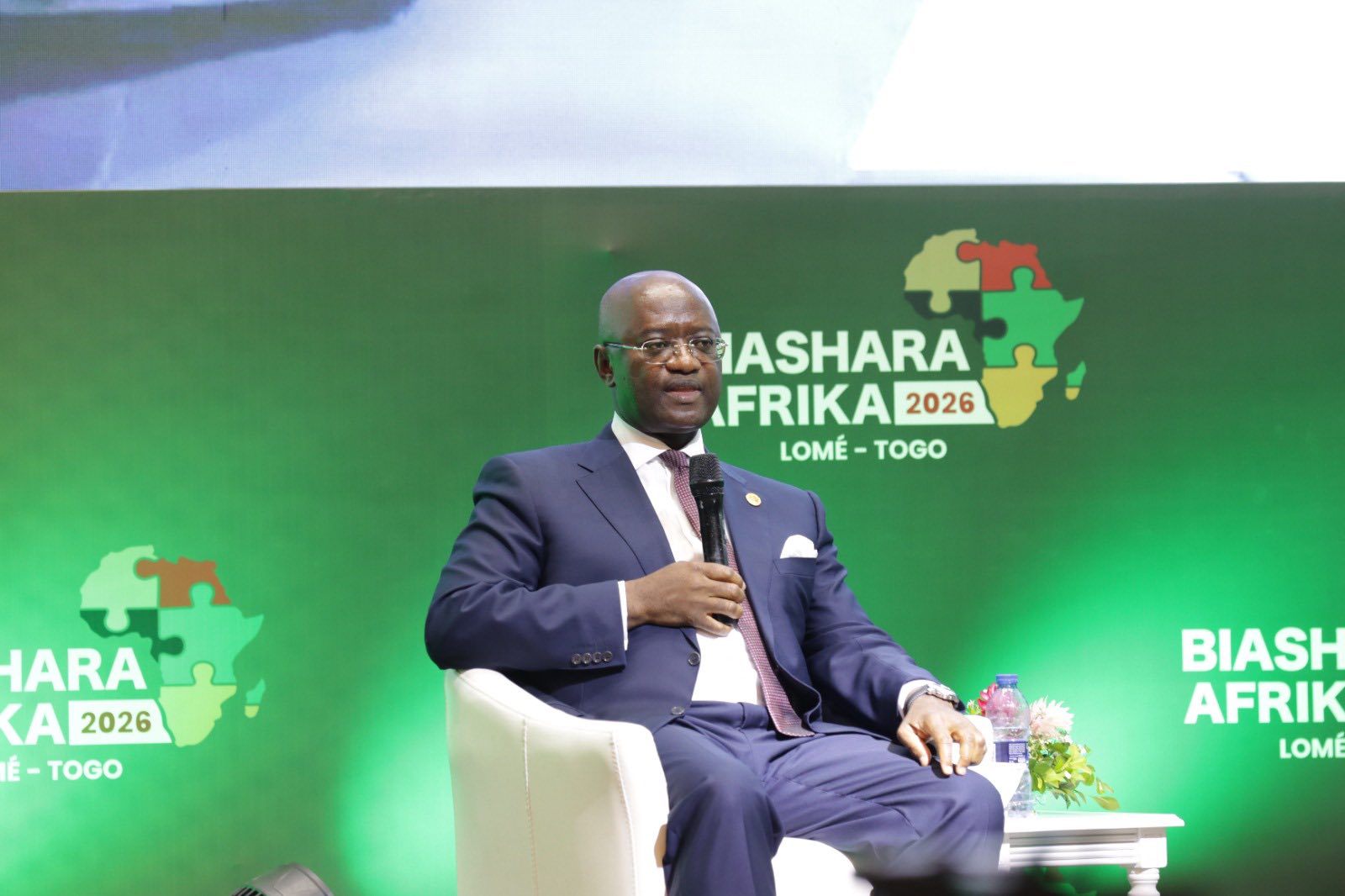
Dr George Elombi, President and Chairman of the Board of Directors of African Export-Import Bank, has declared that the African Continental Free Trade Area (AfCFTA) is no longer merely a political aspiration but a continental project already being implemented through concrete financial systems, industrial projects, and trade infrastructure.
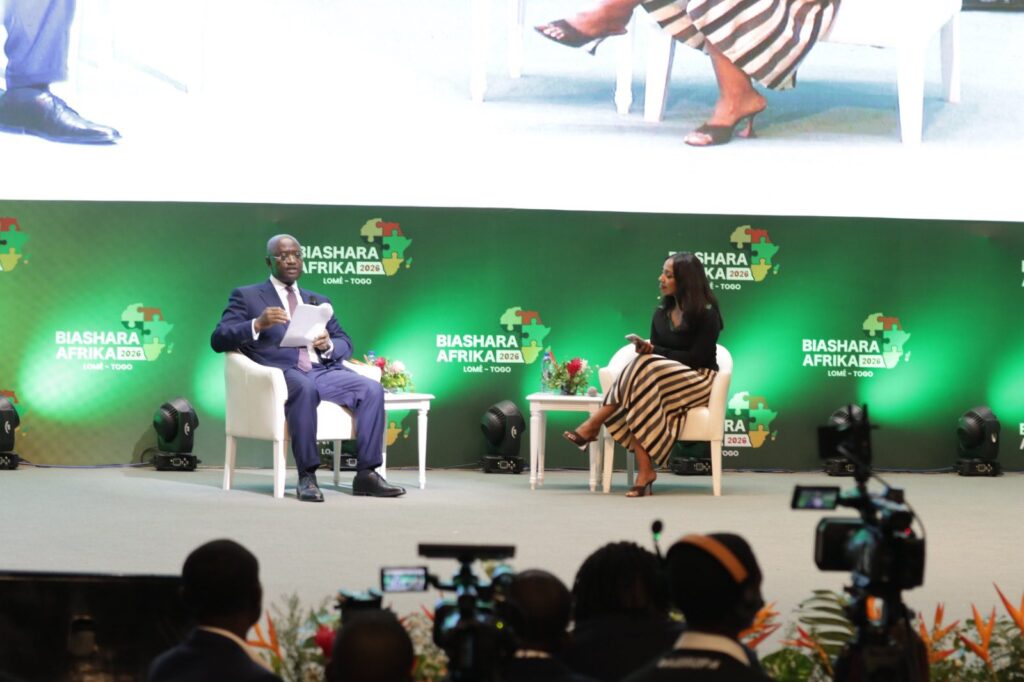
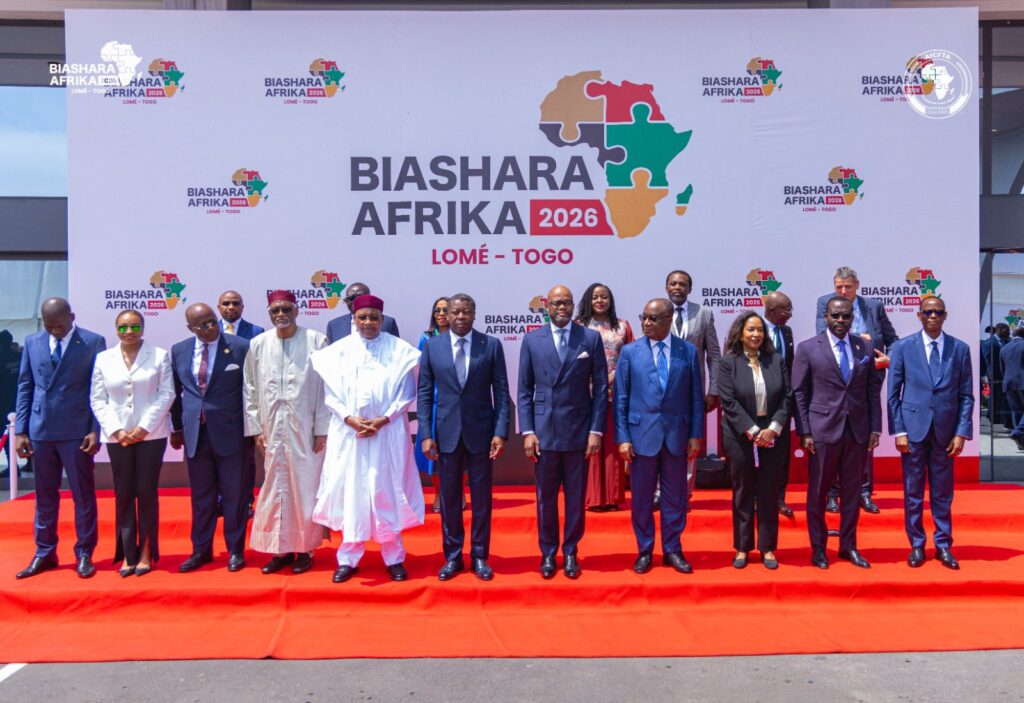
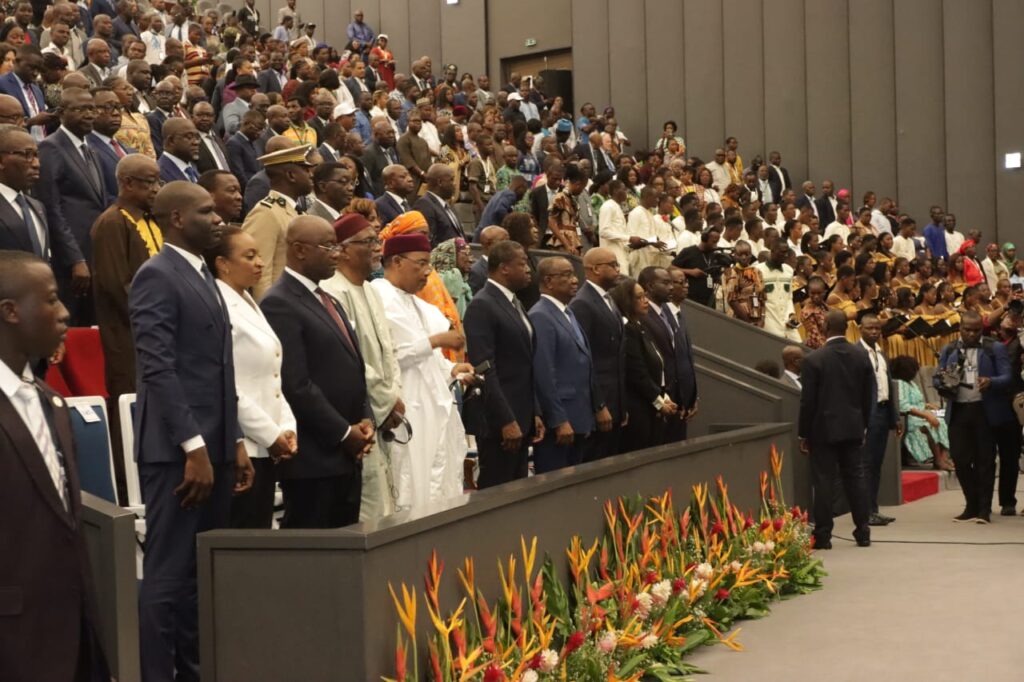
Speaking during a high-level conversation titled “Delivering the AfCFTA: Financing and Scaling Africa’s Single Market – How Can Businesses Drive Implementation?” at the opening of the 3rd Edition of the Biashara Afrika Conference in Lome, Elombi argued that Africa has already entered what he described as the “execution phase” of continental integration.
The session, moderated by Hannane Ferdjani, focused on the gap between the political momentum generated by the AfCFTA and the realities of implementation across the continent.
While acknowledging that many observers believe progress has been slow, Elombi strongly disagreed.
“We have moved from statements to action,” he said repeatedly during the discussion.
According to him, Africa is witnessing one of the fastest ratification processes ever recorded for a continental legal instrument.
Fifty Ratifications and Thousands of Trade Certificates
Elombi pointed out that more than 50 African countries have ratified the AfCFTA agreement, describing the development as unprecedented in the history of African integration efforts.
“There is no African instrument that has received 50 ratifications over such a short period,” he stated.
For Elombi, the issuance of more than 8,500 certificates of origin under the AfCFTA by June last year demonstrates that trade under the agreement is already happening in practical terms.
The certificates of origin allow businesses to benefit from preferential tariffs and trade rules within the AfCFTA framework.
He argued that Africa’s integration journey should not be measured only through political declarations but through the systems now being built to facilitate trade across borders.
Building Africa’s Own Financial Infrastructure
A major focus of Elombi’s intervention was the creation of the Pan-African Payment and Settlement System (PAPSS), which he described as one of the continent’s most transformative trade tools.
The system allows African businesses to trade using local currencies instead of relying heavily on foreign currencies such as the US dollar or euro.
“If you are selling from Togo to Kenya, the Kenyan pays in shillings, the Togolese trader receives CFA francs, and Afreximbank settles the balance,” he explained.
According to him, the payment system currently connects more than 160 African commercial banks, while Afreximbank itself works with over 640 banks across Africa.
Elombi stressed that such infrastructure was previously non-existent because African economies were historically structured to trade with Europe, America, and Asia rather than with each other.
“Our countries were not structured to trade between themselves,” he noted.
He said Africa previously lacked payment systems, logistics arrangements, customs coordination, financing structures, and harmonized standards necessary for intra-African trade.
Trade Fairs and Border Reforms Driving Integration
Beyond financial systems, Elombi highlighted the role of the Intra-African Trade Fair, an initiative championed by Afreximbank to connect African businesses and investors.
According to him, each edition of the trade fair generates more than $40 billion worth of business deals and attracts over 40,000 African traders participating physically and digitally.
“The vision was always there since 1963, but execution was the challenge,” he said.
The last trade fair was held in Algeria, while the next edition is expected to take place in Nigeria.
Elombi also spoke extensively about investments in border infrastructure aimed at easing the movement of goods across Africa.
He cited major trade corridors such as Nigeria-Benin, Senegal-Mali, Côte d’Ivoire-Mali, and Cameroon-Nigeria as strategic routes requiring modernization.
Among the reforms already underway are:
- One-stop border posts
- Harmonized customs procedures
- Digital customs systems
- Customs bond arrangements allowing goods to move across borders without repeated duties
“These are no longer principles or discussions. This is execution,” Elombi emphasized.
Industrialization at the Center of Africa’s Trade Agenda
A significant portion of the discussion focused on industrialization and value addition, which Elombi described as essential for Africa’s economic transformation.
“It is a question of creating wealth,” he said. According to him, Africa cannot build a successful single market if it continues exporting raw materials while importing finished goods at much higher prices.
He argued that the AfCFTA provides the framework for African countries to industrialize collectively and trade finished products among themselves.
Benin’s Cotton Industry as a Model
Elombi presented Benin as one of the strongest examples of how industrialization can transform African economies. Through partnerships involving Afreximbank and industrial investors, Benin established an industrial zone processing 40,000 tons of cotton locally.
The impact, he said, has been dramatic. “Benin is now receiving over $6 billion when it was receiving $800 million,” he revealed.
The industrial zone now exports products to major global brands including:
- Nike
- H&M
- Zara
Elombi added that towels produced in Benin are already being sold in markets in Lagos, Nigeria.
The current processing capacity represents only 10 percent of Benin’s cotton potential, with Afreximbank aiming to increase processing levels to 100,000 tons in the coming years.
Similar industrialization projects are also planned for Nigeria, Mali, Burkina Faso, and Côte d’Ivoire.
Ending Africa’s Dependence on Raw Material Exports
Elombi stressed that Africa must stop exporting raw cotton, raw timber, and unprocessed minerals if it wants to create jobs and retain wealth.
“We should export African garments instead of African cotton,” he said.
He cited Gabon’s decision to ban raw timber exports as another successful case study.
According to him, Gabon now earns 16 times more revenue per cubic meter of wood through local processing than it did when exporting raw logs.
Afreximbank is now exploring similar strategies in sectors such as:
- Textiles
- Timber processing
- Manganese
- Mining
- Manufacturing
The bank’s strategy, he explained, is to move sector-by-sector and country-by-country to build continental value chains.
Bureaucracy Remains Africa’s Biggest Obstacle
Despite highlighting progress, Elombi warned that bureaucracy and outdated mindsets within public institutions remain major barriers to AfCFTA implementation.
“There has to be a real conscientious effort to give approvals in two days, not in two weeks,” he said.
He criticized situations where African travelers face more difficulties entering African countries using African passports than foreign passports, despite regional free movement agreements.
According to him, many of the obstacles to integration are not coming from presidents or ministers but from lower-level civil servants who fail to implement agreed policies.
“The trouble is coming from the civil service,” he stated bluntly.
A Challenge to African Media
In one of the strongest parts of his intervention, Elombi challenged African journalists and social media users to stop portraying Africa primarily through crises, conflict, and instability.
“We cannot continue reporting Africa only through wars, Ebola, and civil strife,” he said.
He argued that too many positive developments happening across the continent go unnoticed because African media often amplify negative stories while ignoring investment and industrial success stories.
“If you continue to report our continent negatively, the world will see us negatively and investors will stay away,” he warned.
Elombi urged journalists to visit industrial zones, infrastructure projects, and manufacturing hubs emerging across Africa under the AfCFTA framework.
“Too many good things are happening,” he said.
Private Sector Must Lead Wealth Creation
Elombi concluded by emphasizing that African governments alone cannot finance the continent’s transformation.
According to him, the role of governments should focus more on enabling environments, infrastructure, education, and healthcare, while the private sector drives production and industrialization.
“The state should take care of schools and hospitals. The private sector should create the goods Africans trade with each other,” he said.
While acknowledging challenges, Elombi maintained that Africa’s single market is gradually taking shape through payment systems, industrial zones, border reforms, trade fairs, and growing political commitment.
“There is money,” he concluded. “With discipline and support from public institutions, Africa will get there.”