Breaking News

As global economic uncertainty deepens, African leaders meeting in Banjul call for bold reforms, stronger partnerships and homegrown solutions to unlock the continent’s vast economic potential.
By Pa Modou Cham
BANJUL, The Gambia — African leaders have called for a fundamental shift in the continent’s development strategy, arguing that investment, innovation and inclusion, not dependence on aid, must become the driving forces behind Africa’s next phase of economic growth.
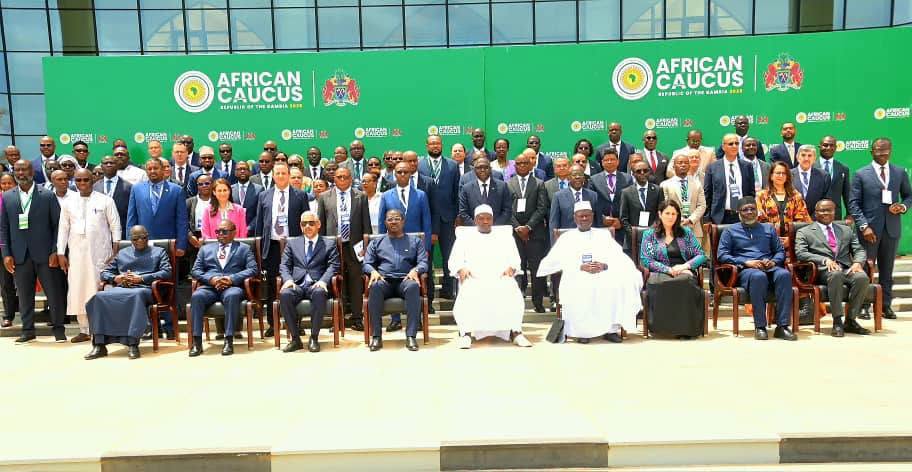
The message resonated throughout the opening ceremony of the 2026 African Caucus Meeting in Banjul on Monday, where presidents, finance ministers, governors of central banks and senior officials from international financial institutions gathered under the theme, “Transforming Africa’s Economies Through Investment, Innovation and Inclusion.”
From Gambian President Adama Barrow to officials of the World Bank, African Union Commission and African Development Bank, speakers presented a united vision of an Africa capable of financing its own future by leveraging its youthful population, abundant natural resources, expanding digital economy and growing regional integration.
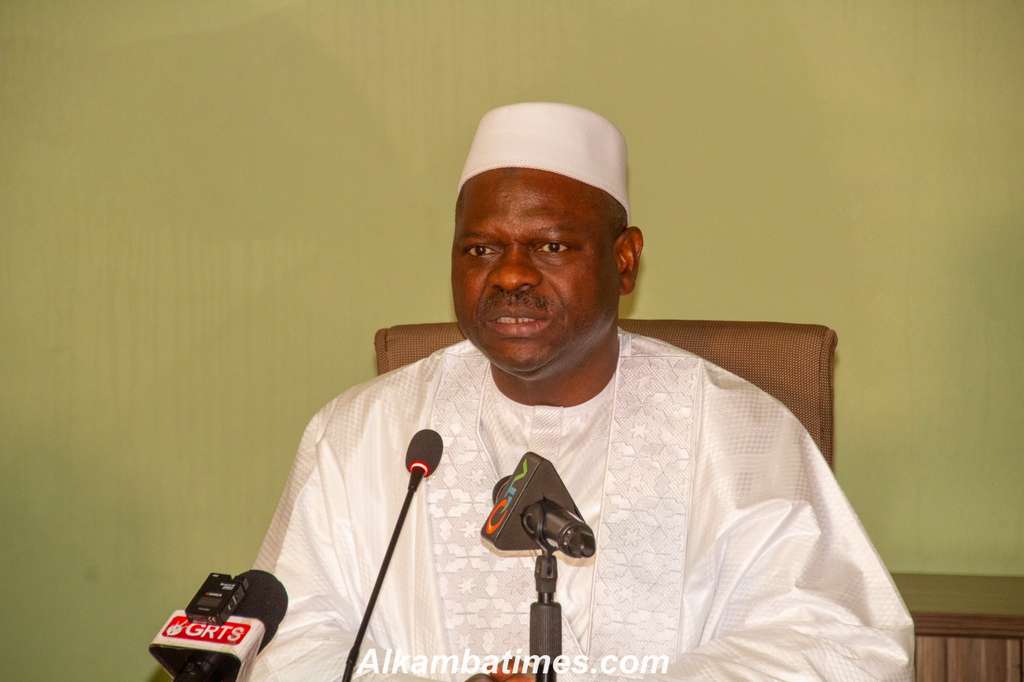
President Barrow described the gathering as a crucial opportunity for African governments and global financial institutions to jointly address the continent’s pressing economic challenges while laying the groundwork for long-term prosperity.
“Africa remains uniquely endowed with rich human capital, vast natural resources and enormous innovation potential,” Barrow told delegates. “Yet we continue to face geopolitical tensions, climate change vulnerabilities, infrastructure deficits and significant financing gaps.”
He said the conference theme reflects Africa’s current priorities, particularly the need to unlock financing for structural transformation while creating quality jobs and ensuring that economic growth reaches all segments of society.
According to the President, no single government can deliver Africa’s transformation alone.
“It requires all hands on deck,” he said, emphasizing stronger collaboration between governments, development partners, academia and the private sector to accelerate inclusive growth.
Barrow also stressed that improved infrastructure remains one of the continent’s biggest priorities, arguing that roads, energy systems and digital connectivity are indispensable for achieving sustainable development and making the African Continental Free Trade Area (AfCFTA) fully operational.
While praising long-standing support from the International Monetary Fund (IMF) and the World Bank, the Gambian leader urged greater assistance in strengthening tax administration, domestic resource mobilization and efforts to combat illicit financial flows that continue to drain billions of dollars from African economies annually.
He said The Gambia’s own investment in roads, electricity, education, healthcare and skills development over the past nine years demonstrates how strategic public investment can stimulate economic transformation while preparing young people for future employment opportunities.
Finance Minister Seedy Keita echoed the President’s optimism but cautioned that Africa faces one of the most challenging global economic environments in decades.
“We meet at a time of tighter financial conditions, rising debt pressures and mounting external shocks,” he said.
Despite those headwinds, Keita argued that Africa possesses extraordinary opportunities that far outweigh its current difficulties.
“Our continent has the world’s youngest population, expanding digital frontiers, strengthening regional integration and abundant natural wealth waiting to be transformed into shared prosperity.”
Rather than asking whether Africa can develop, he said policymakers should now focus on how quickly the continent can transform its economies and ensure that growth is inclusive and sustainable.
He identified two priorities that should dominate discussions during the three-day caucus meeting: unlocking financing for Africa’s future and ensuring that the continent’s natural resources generate value-added industries instead of merely exporting raw materials.
“We must move from resource dependence to value creation, from vulnerability to resilience and from fragmentation to integration,” Keita declared.
His remarks also highlighted The Gambia’s own reform agenda, pointing to increased domestic revenue collection, improved fiscal management, rapid expansion of electricity access and sustained infrastructure development as evidence that African-led reforms can produce measurable economic gains.
For the World Bank, economic transformation ultimately comes down to one issue: employment.
Speaking on behalf of World Bank President Ajay Banga, Vice President for Western and Central Africa Ousmane Diagana repeatedly returned to what he described as Africa’s greatest challenge, creating jobs.
“The three words, investment, innovation and inclusion, converge on a single purpose: jobs, more jobs and better jobs,” he said.
Diagana warned that nearly 90 percent of future global growth in the working-age population between 2030 and 2050 will occur in Africa, making employment creation one of the defining issues for the continent’s future.
He observed that while the private sector already generates most jobs across Africa, many workers remain trapped in low-productivity family enterprises.
To address that challenge, the World Bank is focusing its support on three pillars: investment, innovation and mobilizing private capital, with particular emphasis on sectors capable of creating employment at scale, including energy, agriculture, manufacturing, healthcare and tourism.
Equally important, he said, is ensuring that women, young people and historically marginalized communities benefit from economic growth.
“Inclusion is what true transformation requires,” Diagana said.
The gathering also underscored the growing importance of regional cooperation as African countries seek collective solutions to shared economic challenges.
President Barrow expressed confidence that the discussions in Banjul would generate recommendations capable of shaping Africa’s economic future while strengthening cooperation among member states.
“The outcome of this meeting should serve the useful purpose of addressing persistent and emerging issues affecting member states,” he said.
As delegates begin intensive discussions over the coming days, expectations remain high that the Banjul meeting will produce a unified African position ahead of engagements with the IMF and World Bank later this year.
For many participants, the central message emerging from the opening ceremony was unmistakable: Africa’s future will depend less on the resources it possesses than on how effectively it invests in its people, fosters innovation and ensures that economic growth benefits everyone.
After decades of being viewed primarily as a continent of untapped potential, African leaders now appear determined to reposition the continent as one capable of driving its own transformation through strategic investment, stronger partnerships and a renewed commitment to inclusive development.