Breaking News



Popular News



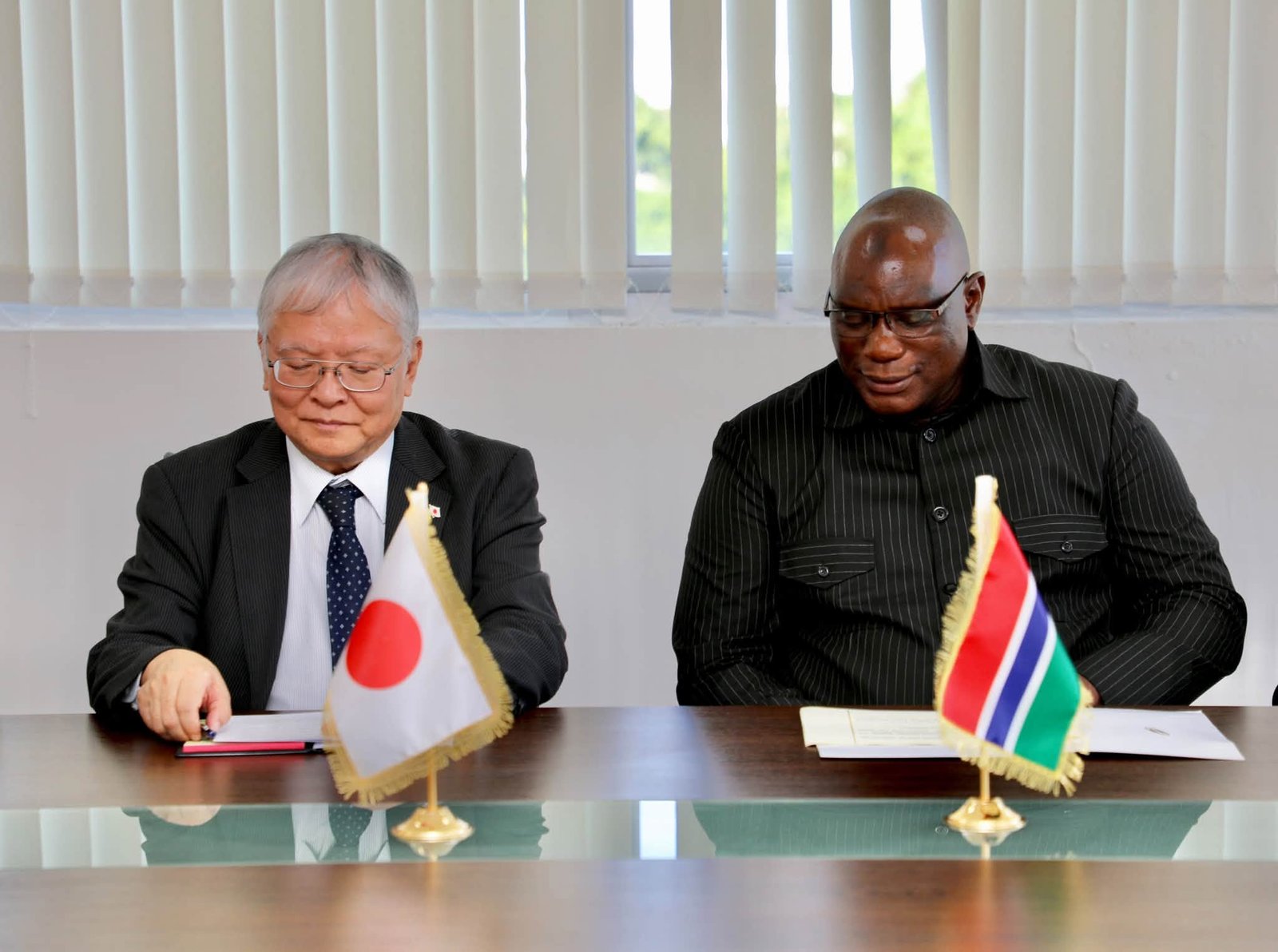
BANJUL, November 11, 2026 – The Governments of The Gambia and Japan have signed a ¥200 million (approximately D100 million) food assistance agreement aimed at addressing food shortages and supporting vulnerable communities across the country.
The agreement was signed on Monday, November 9, under Japan’s 2026 Food Assistance Programme, with the grant expected to finance the procurement of approximately 1,632 metric tonnes of rice for The Gambia.
Minister of Foreign Affairs, International Cooperation and Gambians Abroad, Sering Modou Njie, signed on behalf of the Gambian government, while Japan’s Ambassador to The Gambia, Takeshi Akamatsu, represented his government.
Speaking at the signing ceremony, Minister Njie expressed appreciation to the Japanese government and people for their continued support, noting that the assistance comes at a time when rising food prices, climate change and disruptions to global supply chains are placing pressure on vulnerable households.
He said low-income families, women, children and rural communities remain particularly exposed to the effects of food insecurity.
The minister described the agreement as part of the longstanding bilateral partnership between the two countries, highlighting Japan’s support through the Japan International Cooperation Agency (JICA) in areas including agriculture, healthcare, education and infrastructure.
Njie assured the Japanese government that the assistance would be managed transparently and accountably to ensure that it benefits its intended recipients.
For his part, Ambassador Akamatsu said the latest agreement builds on the two countries’ continuing cooperation, following a similar food assistance arrangement signed in January under the 2025 fiscal year programme.
He explained that the assistance would operate through a dual-benefit arrangement, providing rice to address immediate food needs while generating a counterpart fund through the distribution and utilisation of the donated commodity.
According to the Ambassador, the counterpart fund will be managed through consultations between the two governments and reinvested in social and economic development projects aimed at strengthening human security in The Gambia.
He noted that climate change and growing international instability have made food security increasingly important for protecting vulnerable populations and supporting sustainable national development.
Ambassador Akamatsu reaffirmed Japan’s commitment to working with The Gambia to address shared development challenges, expressing hope that the agreement would further strengthen the longstanding relationship, mutual trust and solidarity between the two countries.
The latest agreement adds to Japan’s development assistance to The Gambia, particularly in sectors considered essential to improving livelihoods and strengthening the country’s resilience to economic and environmental challenges.