Breaking News

Popular News



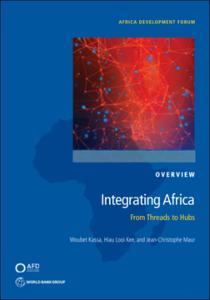
Africa trades as much as East Asia relative to GDP but without the structural transformation. The problem lies not just in the volume of trade, but in its composition and direction: exports remain concentrated in raw commodities destined for external markets, while intra-African trade, more diversified and more manufacturing-intensive accounts for only 15 to 20 percent of the total. Regional integration is a structural requirement for transformation. Yet progress has stalled, not for lack of agreements, but due to shallow commitments, weak implementation, and fragmented production and trade systems. Integrating Africa: From Threads to Hubs offers a new analytical and operational framework organized around four interdependent pillars. – First, integrate production regionally. The report shows that the frontier of feasible industrialization expands significantly at the regional level, opening paths inaccessible to individual countries. – Second, fix the frictions. New trade cost decompositions show that the majority of frictions originate behind the border, in customs inefficiencies, regulatory divergence, and weak logistics while bilateral barriers at the border, including divergent standards, non-mutual recognition, and fragmented transit regimes, compound the problem. The report argues that interoperability, the capacity of goods, data, finance, and regulatory systems to operate seamlessly across borders rather than liberalization alone, is the central condition for integration. – Third, deepen and enforce agreements and implement AfCFTA. Deeper agreements with binding and specific provisions generate substantially larger trade and welfare effects than shallow arrangements. The report benchmarks African agreements against global counterparts, identifies where gaps lie, and shows how the AfCFTA can support more effective integration through new and renewed liberalization commitments, including on services, non-tariff measures and investment, credible dispute settlement, and variable geometry. – Fourth, strengthen the provision of regional public goods. Infrastructure, energy, digital platforms, and security are preconditions for integration. The report develops an operational framework showing that effective provision depends on the alignment of coordination costs, anchor-country incentives, enforcement capacity, and predictable financing and demonstrates how institutional consolidation and plurilateral coalitions can shift provision from low to high equilibrium. Trade fragmentation, the erosion of preferential access, and growth and reorganization of global value chains are reshaping the development landscape. This report provides the analytical foundation and policy architecture to move from commitments to functioning regional integration.
“Kassa, Woubet; Kee, Hiau Looi; Maur, Jean-Christophe. 2026. Integrating Africa: From Threads to Hubs. © World Bank. http://hdl.handle.net/10986/44608 License: CC BY 3.0 IGO.”
https://doi.org/10.1596/978-1-4648-2320-6
https://hdl.handle.net/10986/44608
Kee, Hiau Looi
Maur, Jean-Christophe