

Africa Dreams Again as Nine Nations Prepare for World Cup Stage
Share your love
As the countdown to the 2026 FIFA World Cup enters its final days, a familiar feeling is sweeping across Africa—hope.
From the bustling streets of Casablanca to the beaches of Cape Verde, from the football-mad neighborhoods of Dakar to the townships of Johannesburg, millions of fans are daring to dream that this could be the tournament where Africa finally breaks new ground on football’s biggest stage.
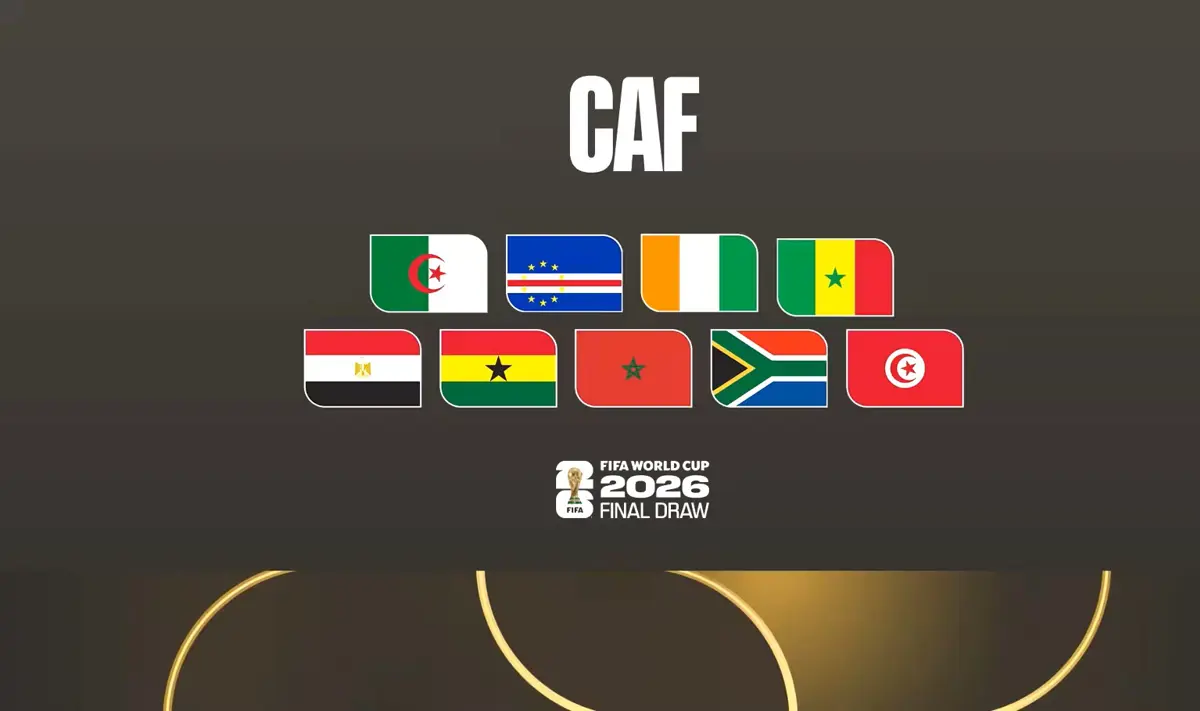
For the first time in World Cup history, nine African nations have secured direct qualification to the tournament, thanks to the expanded 48-team format. The continent will be represented by Morocco, Senegal, Egypt, Algeria, Ghana, Tunisia, Côte d’Ivoire, South Africa, and Cabo Verde, showcasing a blend of established football powers and emerging forces.
Leading Africa’s charge is Morocco, the team that rewrote history at the 2022 World Cup in Qatar by becoming the first African nation to reach the semi-finals. Four years later, the Atlas Lions return carrying the hopes of an entire continent. Their remarkable run in Qatar proved that African teams can compete with—and defeat—the world’s elite.
Senegal also arrives with growing confidence. The Lions of Teranga have become one of Africa’s most consistent sides over the past decade and qualified after a dominant campaign. With a squad rich in talent and experience, many observers believe they possess the quality to challenge deep into the knockout rounds.
Egypt’s return has generated excitement across North Africa. With the experienced Mohamed Salah expected to play a leading role, the Pharaohs will seek to recapture the glory days that once made them a dominant force on the continent.
Meanwhile, reigning African champions Côte d’Ivoire are back on football’s grandest stage for the first time since 2014. Their qualification has reignited memories of the golden generation that once featured Didier Drogba and Yaya Touré, while a new crop of stars aims to write its own chapter in Ivorian football history.
One of the most compelling stories belongs to Cabo Verde. The island nation of just over half a million people has qualified for its first-ever World Cup, completing one of the most remarkable journeys in African football. Their achievement stands as a reminder that determination and organization can overcome limitations in size and resources.
South Africa’s qualification has also been celebrated across the continent. After a 16-year absence from the global showpiece, Bafana Bafana are back and eager to restore their status among Africa’s football elite.
Algeria, Ghana, and Tunisia complete Africa’s contingent, each carrying proud football traditions and passionate support. Their qualification campaigns demonstrated resilience and consistency, qualities that will be crucial against the world’s strongest teams.
As the tournament approaches, the question on many lips is whether Africa can surpass Morocco’s historic semi-final run in Qatar. While the continent has produced world-class players for decades, translating individual brilliance into sustained World Cup success has often proved elusive.
Yet there is a growing sense that African football is entering a new era. Improved infrastructure, stronger domestic leagues, increased international exposure, and a generation of players competing at Europe’s top clubs have narrowed the gap between Africa and traditional football powers.
For now, the continent waits.
In homes, cafés, schools, and public squares across Africa, anticipation continues to build. The flags are ready, the jerseys are out, and the dreams are alive.
When the first whistle blows in North America, nine African nations will carry not only their national colours but also the aspirations of more than a billion people hoping to see Africa shine brighter than ever before on football’s greatest stage.