Breaking News



By CTV Africa
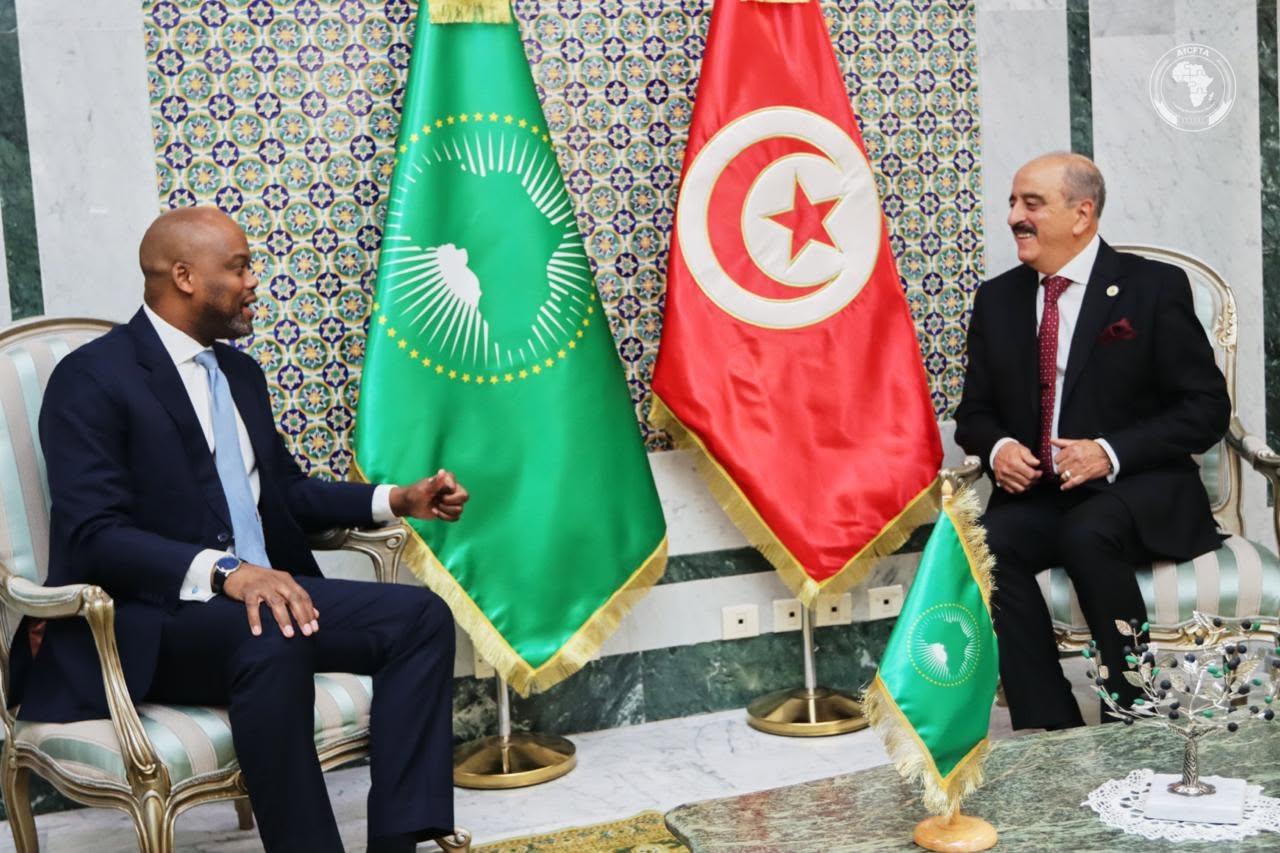
The Secretary-General of the African Continental Free Trade Area (AfCFTA), Wamkele Mene, has concluded a two-day official visit to Tunisia with a renewed commitment to deepen the country’s trade engagement across Africa through a targeted action plan aimed at boosting exports, improving logistics, and strengthening private sector participation.
The visit, held from June 11 to 12, marked a significant step in reinforcing cooperation between the AfCFTA Secretariat and the Tunisian government as both sides seek to transform Tunisia’s advanced implementation of the continental trade agreement into greater commercial opportunities across African markets.
During the visit, Mene held high-level meetings with Tunisia’s Minister of Foreign Affairs, Migration and Tunisians Abroad, Mohamed Ali Nafti, and the Minister of Trade and Export Development, Samir Abid. He also engaged with African diplomats accredited in Tunis, met leaders of Tunisia’s private sector at the Export Promotion Centre (CEPEX), and addressed local media during a closing press conference.
The AfCFTA Secretary-General praised Tunisia’s progress in implementing the continental trade agreement, describing the North African nation as one of the leading states in translating AfCFTA commitments into practical trade opportunities.
Tunisia ratified the AfCFTA Agreement in 2020, participated in the Guided Trade Initiative, and has already domesticated its tariff schedule, allowing businesses to benefit from preferential trade arrangements under the agreement. More than 300 AfCFTA certificates of origin have been issued by Tunisian authorities, enabling companies to access markets across the continent.
Mene emphasized that the private sector remains central to the success of the AfCFTA, stressing that businesses must take advantage of emerging opportunities in African markets. He encouraged Tunisian companies to identify both export and import opportunities across the continent, noting that the success of the agreement depends on increasing the flow of goods between African countries.
“The objective is clear: Tunisian products must reach African markets, and African products must reach Tunisia,” Mene said during discussions with business leaders.
He also highlighted key trade facilitation tools available to businesses, including the Pan-African Payment and Settlement System (PAPSS), which enables transactions in local currencies, and a range of digital trade and market intelligence platforms developed under the AfCFTA’s trade digitalisation programme.
At the conclusion of the visit, the AfCFTA Secretariat and Tunisian authorities agreed on a focused action plan centered on four strategic priorities: transport and logistics, the development of a trade corridor linking the Sahel and the Mediterranean, private sector engagement, and increased awareness of opportunities under the AfCFTA framework.
The parties agreed that implementation of the plan would begin immediately, with progress to be monitored through continuous dialogue and cooperation.
Reflecting on Tunisia’s trade potential, Mene noted that while the country has traditionally relied heavily on established export markets, the AfCFTA offers an opportunity to diversify trade relationships across the African continent.
“Africa is open for business for Tunisia, beyond COMESA,” he stated.
He further stressed that the AfCFTA has moved beyond negotiations and is now delivering tangible results.
“The AfCFTA is no longer a negotiation. It is an operational reality, and Tunisia is among the countries proving it,” Mene said.
The Secretary-General also announced plans to return to Tunisia for upcoming investment and business forums, reaffirming the AfCFTA Secretariat’s commitment to providing both technical and policy support to help the country maximize opportunities under the continental trade agreement.
The visit underscores growing efforts to accelerate intra-African trade and strengthen economic integration under the AfCFTA, one of the flagship projects of the African Union’s Agenda 2063. As countries increasingly shift from negotiations to implementation, Tunisia’s experience is being highlighted as an example of how African nations can leverage the agreement to unlock new markets and drive sustainable economic growth.