Breaking News


Popular News





By Pa Modou Cham
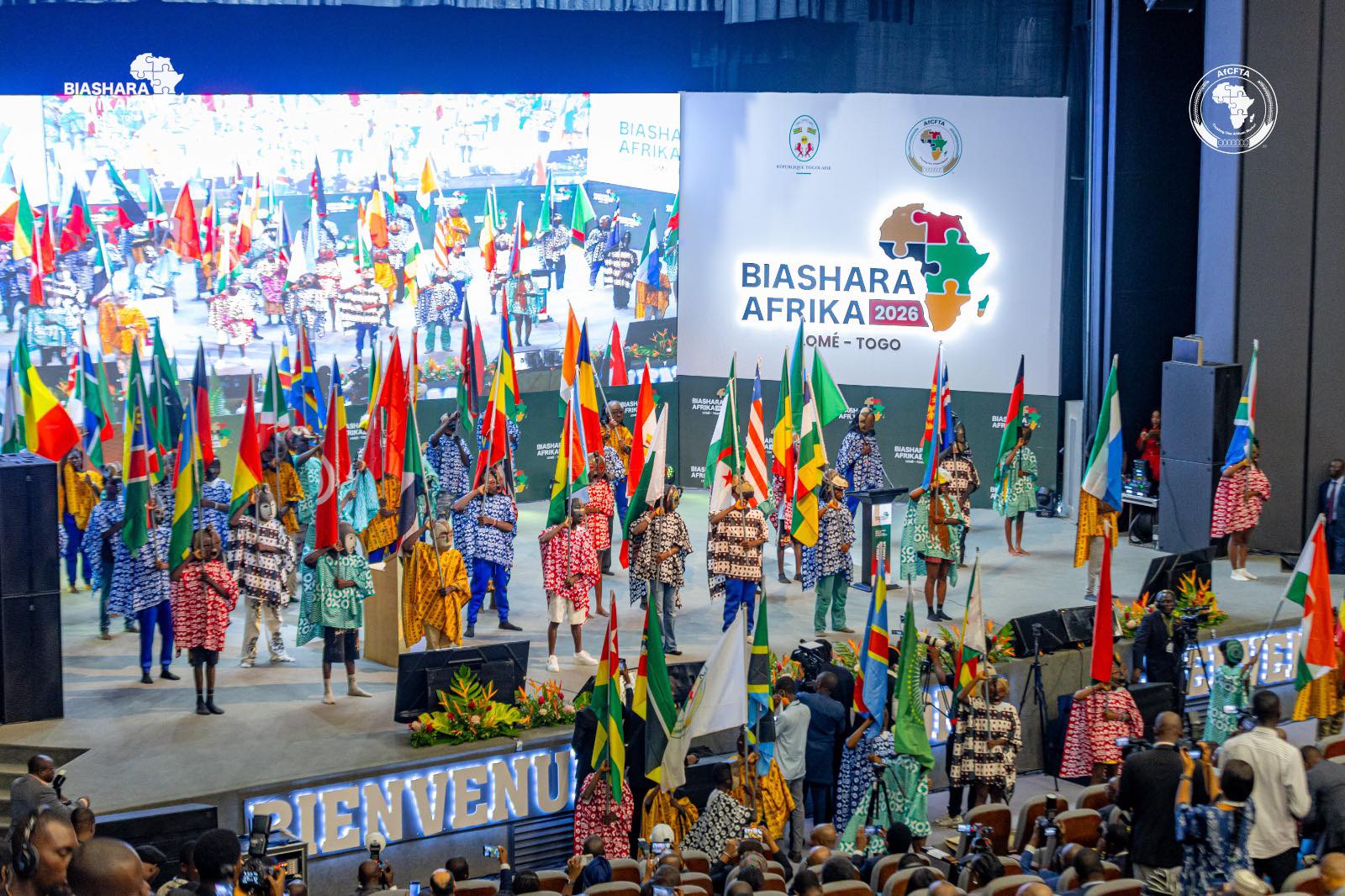
The 3rd Edition of the Biashara Afrika Conference closed in Lomé, Togo, on Wednesday with a powerful call for African governments and businesses to accelerate the implementation of the African Continental Free Trade Area (AfCFTA), as leaders hailed the forum as a turning point for continental economic integration.
Hosted in the Togolese capital over three days, the conference brought together more than 3,000 participants from 48 countries, over 700 exhibitors, 97 foreign stands, 15 high-level panel discussions and five side events focused on trade, investment, logistics, digital commerce and industrialization in Africa.
Four Memoranda of Understanding (MoUs) were also signed during the forum, including agreements involving the AfCFTA Secretariat and the International Trade Centre (ITC), Rendeavor, and Scanning Systems, as well as a partnership between the Chamber of Commerce and Industry and FEWACCI.
Speaking during the closing ceremony, Mr Badanam Patoki, Togo’s Minister of Economy and Strategic Monitoring, praised the conference for transforming Lomé into “the beating heart of African economic integration,” saying the event demonstrated that the AfCFTA is no longer a theoretical project but “a dynamic already in motion.”
“The AfCFTA is no longer a theoretical project,” the minister declared. “It is now a dynamic on the move.”
He said discussions throughout the conference highlighted Africa’s growing intra-continental trade, increasing use of preferential tariffs and stronger confidence among African businesses in the continental market.
“In a world marked by geopolitical tensions, protectionism and economic uncertainty, African economic integration is no longer an option,” he said. “It is a strategic necessity for our economic security and our collective prosperity.”
The minister emphasized that Africa’s future depends on regional value chains, industrialization, digital trade, SME financing and the economic empowerment of women and youth. He also reaffirmed Togo’s ambition to position itself as a major logistics and industrial hub in West Africa through investments in infrastructure, public service digitization and reforms aimed at improving the business climate.
One of the strongest moments of the ceremony came when officials highlighted Togo’s newly announced visa-free policy for all African travelers, a decision unveiled during the conference following concerns raised by delegates about barriers to free movement across the continent.
“It is time to accelerate implementation while removing the non-tariff barriers still in place,” the minister said, describing the visa decision as part of Togo’s commitment to African integration.
Secretary-General of the AfCFTA Secretariat, Wamkele Mene, also praised the conference as a “remarkably successful event,” despite acknowledging the relatively low attendance of government ministers.
“I am not discouraged,” he said. “Because the drivers of Africa’s economy are here. Leaders come and go. The private sector will remain.”
Mene praised the quality of discussions and the role played by entrepreneurs, investors and SMEs, saying the conference had transformed the AfCFTA into “a people’s movement” rather than a project limited to governments and institutions.
He singled out Togo’s leadership under President Faure Gnassingbé, particularly following the rapid announcement of visa-free travel for Africans entering the country.
“This is leadership,” Mene said. “This is decisive leadership that confronts problems and solves them immediately.”
The AfCFTA chief also pointed to persistent challenges facing African trade, including infrastructure deficits, logistics costs and trade finance gaps, but insisted that African institutions and businesses are increasingly finding African-led solutions.
Among the major announcements during the forum was the launch of the Africa Trade and Distribution Company initiative, aimed at supporting SMEs and strengthening continental supply chains.
Mene said the conference’s long-term ambition is to double intra-African trade by 2035, while also doubling SME participation and youth involvement in AfCFTA value chains.
“Difficult challenges, but not impossible,” he concluded.
As delegates departed Lomé, the message from Biashara Afrika 2026 was unmistakable: Africa’s economic integration agenda is accelerating, and the private sector is expected to play a central role in transforming the continent’s vast market into tangible prosperity for millions.