Breaking News

Popular News


Leaders at the African Caucus in Banjul say creating jobs, investing in infrastructure and accelerating the African Continental Free Trade Area are critical to transforming the continent’s youthful population into a powerful engine of economic growth.
By CTV Africa
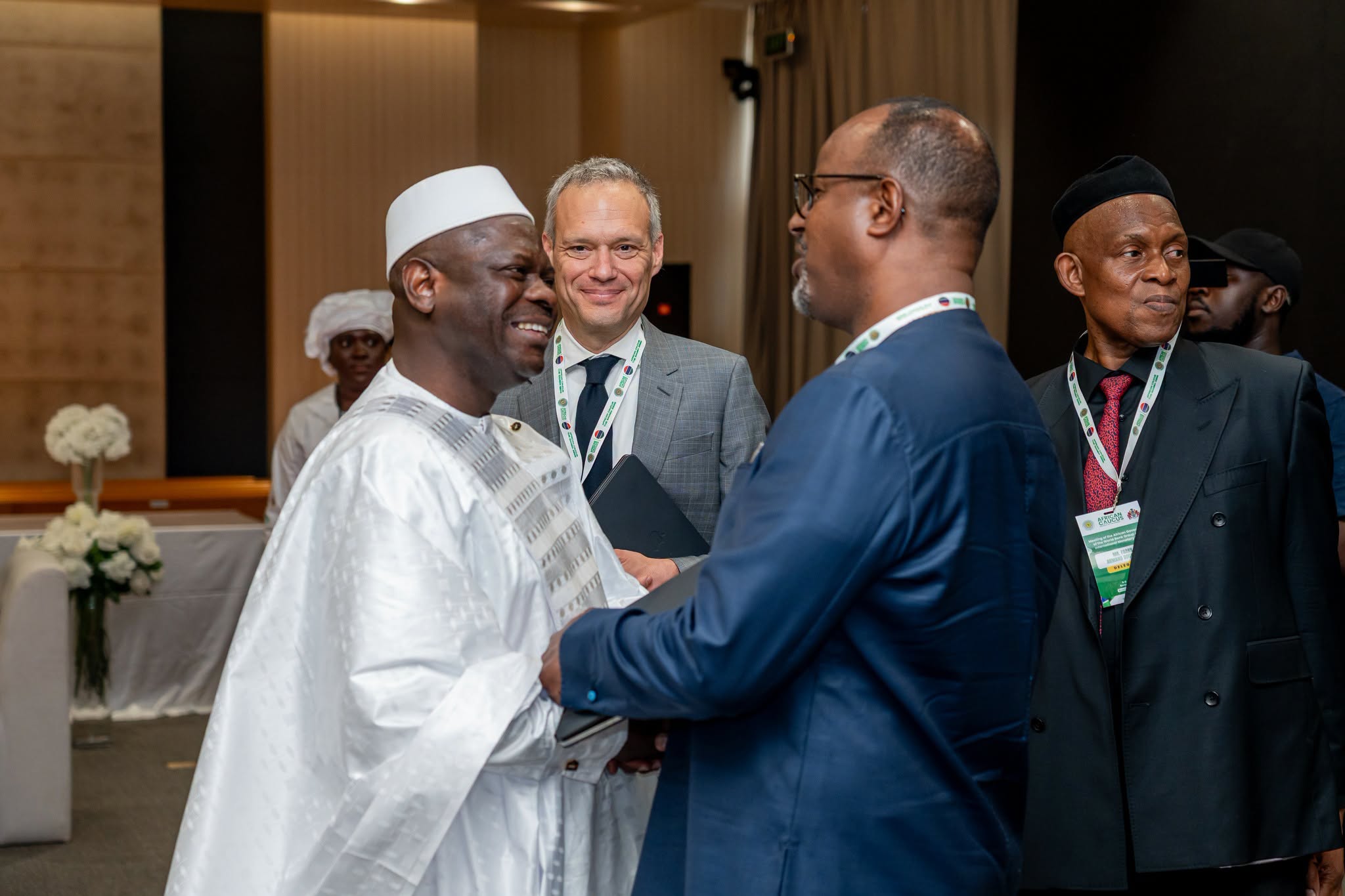
BANJUL, The Gambia — Creating millions of jobs, closing Africa’s infrastructure gap and accelerating the implementation of the African Continental Free Trade Area (AfCFTA) emerged as the defining priorities for the continent’s economic future as African leaders and development partners convened for the opening of the 2026 African Caucus in Banjul.
Leaders agreed that Africa possesses all the ingredients needed to become a global economic powerhouse. However, they cautioned that the continent’s vast youthful population, abundant natural resources and expanding markets will only translate into sustainable prosperity through deliberate investments in infrastructure, industrialization, regional trade and job creation.
The discussions, held under the theme “Transforming Africa’s Economies Through Investment, Innovation and Inclusion,” focused on how African countries can convert their demographic advantage into inclusive economic growth while reducing dependence on raw commodity exports.
Delivering the keynote address, President of the African Development Bank (AfDB) Group, Dr. Sidi Ould Tah, described Africa’s growing youth population as both its greatest opportunity and its greatest responsibility.
“Sixty percent of Africa’s population is under the age of 25,” he said. “Our greatest asset, or without opportunity, our greatest risk.”
Tah stressed that governments must invest significantly in education, vocational training, entrepreneurship and small businesses to ensure that millions of young Africans entering the labour market each year become productive contributors to economic growth rather than victims of unemployment.
“We need massive investment in skills and entrepreneurship for young people and women,” he said. “We need to create jobs for our youth and support our micro, small and medium-sized enterprises, which represent more than 90 percent of Africa’s economic fabric.”
His remarks echoed those of World Bank Vice President for Western and Central Africa, Ousmane Diagana, who warned that Africa is approaching an unprecedented demographic transition that will shape the global economy for decades.
According to Diagana, nearly 90 percent of the increase in the world’s working-age population between 2030 and 2050 will occur in Africa, with Sub-Saharan Africa alone expected to add more than 620 million working-age people by mid-century.
“The fundamental question before us is whether our economies will build the firms and industries capable of absorbing these numbers into productive work,” he said.
Diagana noted that while the private sector already generates approximately nine out of every ten jobs across the continent, many of those jobs remain concentrated in low-productivity informal and family-owned enterprises.
“Our task is about creating jobs,” he emphasized. “Investment, innovation and inclusion converge on a single purpose, jobs, more jobs and better jobs.”
He said the World Bank’s strategy focuses on sectors capable of generating employment at scale, including agriculture, manufacturing, tourism, healthcare and energy, while also mobilizing greater private sector investment.
The discussions also underscored that job creation cannot be achieved without addressing Africa’s persistent infrastructure deficit.
Gambian President Adama Barrow said inadequate roads, energy systems, transport networks and digital infrastructure continue to undermine the continent’s competitiveness and increase the cost of doing business.
Despite Africa’s enormous natural wealth and human capital, he observed that poor infrastructure remains one of the greatest obstacles to sustainable economic transformation.
“Africa continues to be the region with the highest infrastructure gap,” Barrow said, adding that governments and development partners must work together to bridge this deficit if the continent is to achieve its development ambitions.
The Gambian leader also emphasized that the success of the African Continental Free Trade Area depends on more than political agreements.
“The AfCFTA vision is not attainable without the proper platforms and instruments of trade facilitation,” he said.
He identified efficient payment systems, improved banking relationships, transport corridors, reliable electricity, digital connectivity and easier access to trade finance as essential foundations for unlocking the full benefits of continental trade.
Barrow highlighted The Gambia’s own development experience, noting that over the past nine years the government has invested heavily in roads, electricity, healthcare, education and skills development to lay the foundation for long-term economic growth.
Gambia’s Finance Minister Seedy Keita reinforced the argument that Africa must shift from exporting raw materials to building industries that add value and create employment at home.
“Africa’s resources must become engines of opportunity through value addition, industrialization and strategic investment in energy, infrastructure and digital transformation,” he said.
“This is how we build economies that are not only resource-rich but also value-rich, job-rich and future-ready.”
Keita said AfCFTA presents an unprecedented opportunity for African businesses to expand into a continental market of more than 1.4 billion people. However, he stressed that governments must improve access to finance, strengthen domestic capital markets and create an enabling environment for businesses, particularly small and medium-sized enterprises (SMEs), which remain the backbone of African economies.
The African Union Commission also urged policymakers to place entrepreneurs, start-ups and SMEs at the centre of Africa’s economic transformation.
Deputy Chairperson Ambassador Selma Malika Haddadi argued that while multinational corporations have an important role to play, Africa’s future growth will largely be driven by local businesses capable of responding to domestic challenges.
“If jobs matter, we must finance job creators,” she said.
She criticized financial systems that continue to leave many African entrepreneurs without affordable credit, describing it as a contradiction that governments celebrate youth and innovation while SMEs and start-ups remain underfunded and over-collateralized.
“Too often our policies celebrate youth and innovation while our financial systems leave SMEs and start-ups priced out of capital,” Haddadi said. “This contradiction must end.”
She further argued that regional integration under AfCFTA should be viewed as one of Africa’s greatest competitive advantages, enabling businesses to benefit from larger markets, lower transaction costs and stronger regional value chains.
For Dr. Tah, projects such as the Senegambia Bridge demonstrate how strategic infrastructure investments can strengthen regional integration while attracting private capital for future development.
“The bridge binds our markets into a shared destiny,” he said, noting that such investments should be seen not simply as public expenditure but as productive assets capable of unlocking further economic opportunities.
As deliberations continue over the next three days, delegates are expected to formulate a common African position ahead of engagements with the International Monetary Fund and the World Bank later this year.
The opening ceremony left little doubt that Africa’s leaders see the continent’s economic future resting not merely on its abundant natural resources but on its ability to create decent jobs, build resilient infrastructure and fully implement the African Continental Free Trade Area.
If matched by sustained political commitment and coordinated investment, they believe these pillars could transform Africa into one of the world’s fastest-growing and most competitive economic regions, delivering prosperity for millions across the continent.