Breaking News

By CTV Africa
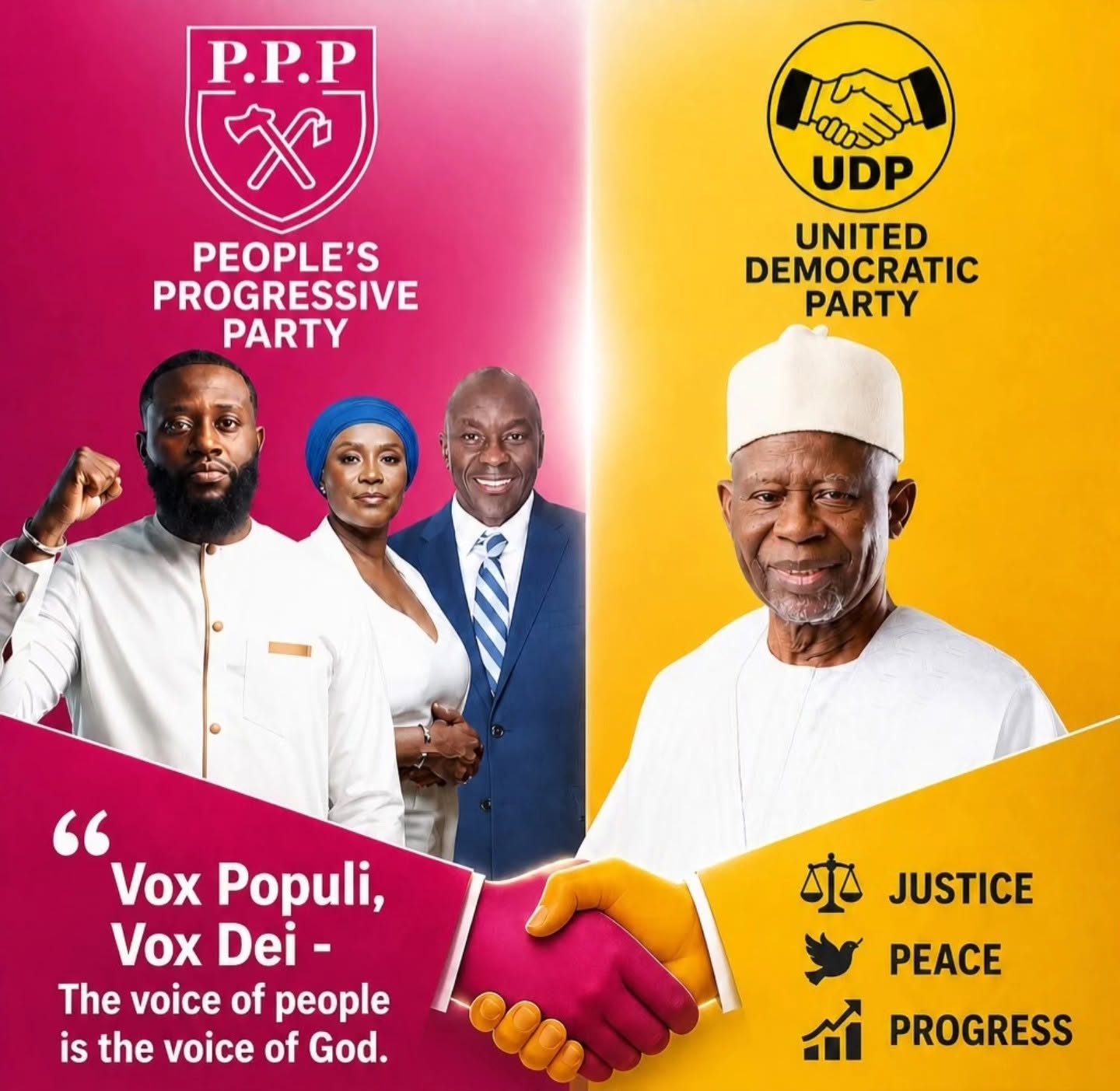
As opposition parties intensify efforts to forge a united front ahead of The Gambia’s December 2026 presidential election, the decision by the People’s Progressive Party (PPP) to support a coalition led by the United Democratic Party (UDP) has once again highlighted the latter’s enduring influence in the country’s political landscape.
PPP leader Saikou Sawo announced that his party is prepared to join a UDP-led alliance, arguing that political realities rather than individual ambitions should guide the opposition’s strategy if it hopes to unseat the incumbent government.
His endorsement reflects what many political observers have long acknowledged: that the UDP remains the country’s most experienced and electorally established opposition party, having spent nearly three decades building a nationwide support base through successive elections, grassroots mobilisation and sustained political activism.
Founded in 1996 by lawyer and veteran politician Ousainou Darboe, the UDP emerged at a time when The Gambia was under military rule following the 1994 coup. While many political parties struggled to reorganize under the new political order, the UDP quickly established itself as the principal opposition force, campaigning on constitutional democracy, rule of law and accountable governance.
Since its formation, the party has consistently contested every presidential election and has gradually expanded its electoral footprint across the country. Despite repeated defeats at the presidential level, the UDP steadily increased its parliamentary representation and strengthened its grassroots structures, becoming the largest opposition party in terms of elected representatives and popular support.
Its political resilience became particularly evident during the years leading to the historic 2016 presidential election.
That election marked a turning point in Gambian politics. Rather than insisting on fielding its own party leader, the UDP made the strategic decision to support independent candidate Adama Barrow under the Coalition 2016 banner.
The decision followed months of negotiations among opposition parties after the imprisonment of Darboe and several senior UDP officials during nationwide protests demanding electoral reforms and justice for slain activist Solo Sandeng.
Many politicians have credited the UDP’s extensive grassroots network and campaign machinery as instrumental in delivering the coalition’s electoral victory over former president Yahya Jammeh, ending his 22-year rule.
Although Barrow later formed his own political movement following disagreements with coalition partners, the UDP remained the largest opposition party and has continued to dominate parliamentary elections.
In the 2022 National Assembly elections, the party secured the highest number of elected seats, reinforcing its status as the country’s strongest opposition force despite losing the 2021 presidential election.
Over the years, the UDP has also produced some of The Gambia’s most experienced legislators, local government leaders and political organizers. Its structures extend from urban municipalities to remote rural communities, giving it one of the most extensive political networks in the country.
It is this long history of organization and electoral participation that PPP leader Saikou Sawo believes should form the basis of coalition negotiations.
In announcing his party’s readiness to work under UDP leadership, Sawo argued that acknowledging political realities does not diminish the contributions or aspirations of other opposition parties.
“The UDP has spent decades building the country’s largest opposition base, political capital earned through years of struggle, sacrifice and consistent electoral support,” he said.
According to Sawo, any serious effort to defeat the incumbent administration must recognize that political foundation while focusing on the broader national interest rather than individual ambitions.
He said the PPP is prepared to contribute its own strengths within a UDP-led coalition if doing so offers the strongest and most credible path toward political change.
Sawo also warned that time is rapidly running out before the December election.
Rather than continuing lengthy debates over who should lead a coalition, he urged opposition parties to begin building the operational systems necessary to secure victory.
These, he said, include establishing a parallel vote tabulation system, recruiting and training polling agents nationwide, creating secure real-time election reporting mechanisms and preparing legal teams capable of responding swiftly to electoral disputes.
“Every month spent debating leadership is a month lost from preparing for victory,” Sawo stated.
His remarks reflect a growing sentiment among sections of the opposition that organizational preparedness may prove just as decisive as coalition negotiations.
Political commentators note that while coalition talks inevitably involve difficult compromises, parties with established campaign infrastructure often become central to such arrangements because they possess experienced election agents, functioning constituency structures and long-standing voter networks.
For the UDP, decades of continuous participation in Gambian politics have built an institutional memory that few parties can match. From surviving periods of political repression to leading parliamentary opposition and helping shape one of the country’s most significant democratic transitions, the party’s experience remains one of its strongest political assets.
Whether that experience ultimately translates into leadership of a united opposition coalition remains to be seen. However, the PPP’s endorsement has added fresh momentum to calls for opposition parties to move beyond leadership negotiations and focus on building a coordinated campaign capable of mounting a formidable challenge in December.
With only months remaining before Gambians head to the polls, the coming weeks are expected to determine whether the opposition can transform its combined political experience into a unified electoral strategy, or risk entering another election divided.