Breaking News



Popular News


By Pa Modou Cham
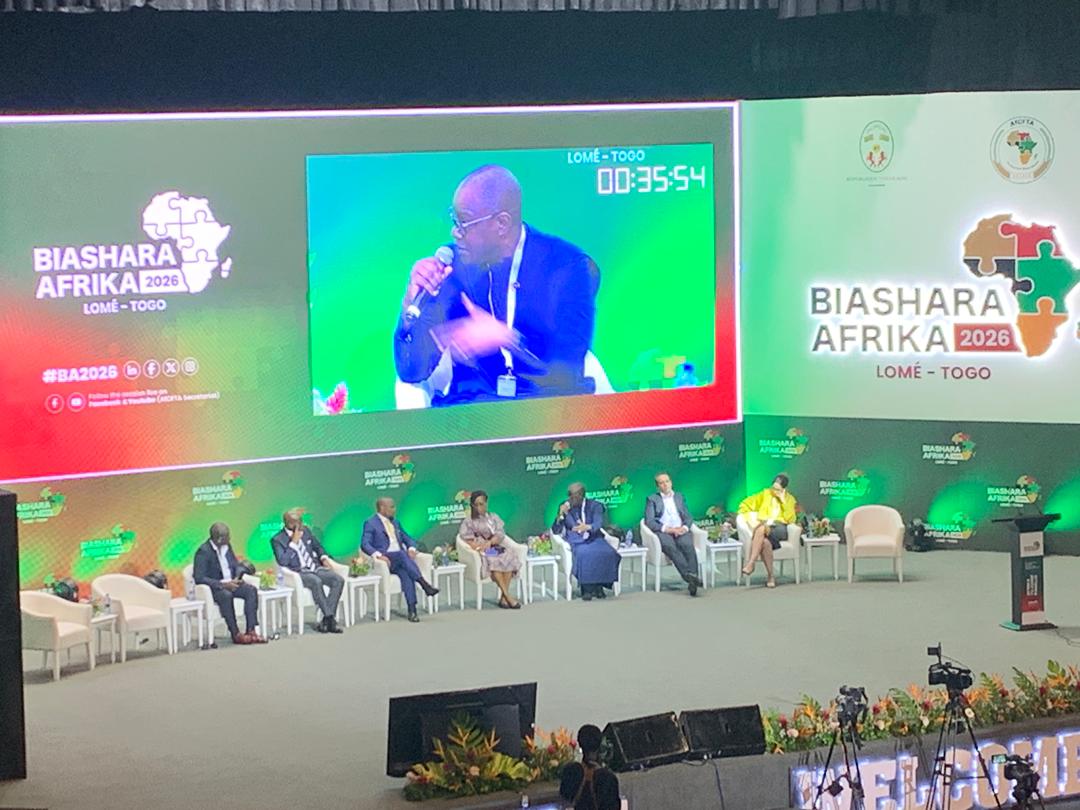
Trade, logistics and finance experts have called for urgent reforms to improve Africa’s maritime connectivity, logistics corridors and trade systems in order to fully unlock the potential of the African Continental Free Trade Area (AfCFTA).
The calls were made during a high-level panel discussion today at the ongoing Biashara Afrika Forum in Lomé, where speakers emphasised the need for stronger corridor integration, harmonised customs systems, and increased investment in infrastructure across the continent.
Moderating the session, Godfrey Mutizwa stressed that African countries must urgently synchronize efforts to remove the barriers slowing intra-African trade.
“The opportunity to fix this is now,” he said. “We are synchronizing and identifying some of the bottlenecks that are preventing us from trading better as Africans.”
Ports Must Be Linked to Efficient Corridors
Mr. Khalid Bichou, Managing Director of Ports and Logistics and Chair of the Global Ports Research Alliance, argued that Africa’s understanding of port efficiency must go beyond modern terminals and focus on the broader transport and logistics ecosystem.
According to him, several African ports now possess world-class infrastructure due to private sector concessions and international investments, but cargo movement remains slow because inland connectivity systems remain weak.
“Port efficiency must be understood in the broader context of corridor efficiency,” Bichou said. “Ports are part of the logistics and supply chain system.”
He explained that efficiency is interpreted differently by various stakeholders. While terminal operators focus on profitability, shipping companies prioritize faster turnaround times, and transport corridors require seamless cargo movement across borders.
Bichou warned that Africa’s reforms have largely concentrated on port terminals while neglecting inland transport corridors.
“We only concession port terminals. We do not concession the corridor system,” he stated.
The maritime expert also criticized poor logistics management practices across the continent, particularly the long storage periods for containers at African ports.
“In many African ports, containers remain for months or even years because storage costs are too low and systems are inefficient,” he added.
He further highlighted the absence of a harmonized customs and documentation system in Africa, questioning why ships moving between African ports are repeatedly required to submit the same documentation.
“Why should a ship going from Tangier to another African destination submit the same documents repeatedly in every port?” he asked.
Bichou called for standardized digital systems, stronger governance and increased investment in African-owned maritime transport systems, noting that the continent still lacks an integrated African cabotage network.
“We are the only continent where we do not have a continental African water transport system,” he said.
Abidjan-Lagos Corridor Critical to West African Trade
Dr. Hartense M.E., Executive Secretary of the Abidjan-Lagos Corridor, described the Abidjan-Lagos Corridor as one of West Africa’s most strategic economic routes.
She explained that the corridor accounts for nearly 75 percent of economic activity in the region and connects major ports and economies across Côte d’Ivoire, Ghana, Togo, Benin and Nigeria.
“If we want to facilitate commerce, we must connect all our corridors,” she said, emphasizing the importance of linking Africa’s transport systems internally and externally under the AfCFTA framework.
CMA CGM Expanding African Maritime Investments
Adeline Gobiloud of CMA CGM Group said Africa is witnessing a major transformation driven by economic growth and increasing efforts by governments and businesses to control supply chains and reduce exposure to global geopolitical instability.
She explained that the company contributes to Africa’s development through maritime transport services and logistics operations managed by its subsidiary, Ceva Logistics.
“To support Africa’s growth, we are increasing capacity and investing in efficient terminals,” she said, citing recent investments in Kenya.
Gobiloud stressed the need for stronger maritime connections between African regions including Southern, Eastern and Western Africa.
“We need to develop connections between African ports,” she stated.
She said the company is building maritime hubs and feeder systems aimed at strengthening regional integration while also supporting trade under the AfCFTA.
The logistics executive identified customs harmonization, border simplification and digitalization as key priorities for improving trade connectivity across the continent.
“We are investing in Africa and developing local talents to grow together with the continent,” she added.
Responding to questions on regional trade integration, she acknowledged increasing demand for stronger connectivity between African regions.
“This is definitely something that we see, and we are happy about it,” she said.
Afreximbank Highlights Infrastructure Financing
Mr. Jean Arsene Yerima, Regional Chief Operating Officer for Francophone West Africa at Afreximbank, highlighted the importance of infrastructure financing in reducing Africa’s high transport costs and improving intra-African trade.
He noted that transport costs across Africa remain significantly higher than in Europe and North America due to weak logistics systems and trade imbalances where many African countries export raw materials while importing finished products.
“The way we look at it at Afreximbank is to work with governments and sector players to support infrastructure that improves trade within Africa and between Africa and the rest of the world,” he explained.
Yerima said the bank is financing roads and trade corridors designed to facilitate smooth cargo movement from ports to industrial and production zones.
He also introduced Afreximbank’s Engineering, Procurement and Construction (EPC) platform, which enables African construction firms to execute projects across the continent.
“You can have an EPC company from North Africa building a project in Togo,” he said. “This helps retain capital on the continent and transfer skills to local subcontractors.”
According to him, Afreximbank is also collaborating with regional economic communities to establish a single customs transit guarantee system that would allow goods to move across multiple borders using one customs instrument.
“Today, if a truck crosses several borders, it needs different customs instruments in every country,” he stated. “That increases transport costs.”
Yerima further pointed to public-private partnership projects such as industrial parks in Togo, where private investors assume borrowing responsibilities, enabling governments to preserve resources for social development priorities.