



AfCFTA Council of Ministers concludes 18th Meeting in Abuja, Nigeria assumes the chairpersonship as focus shifts fully to implementation
Share your love
Press Release
As global trade fragments and competition for investment and control over supply chains intensifies, Ministers placed the delivery of a single African market at the centre of the continent’s economic priority — and welcomed Nigeria as the incoming Chair of the Council’s Bureau.
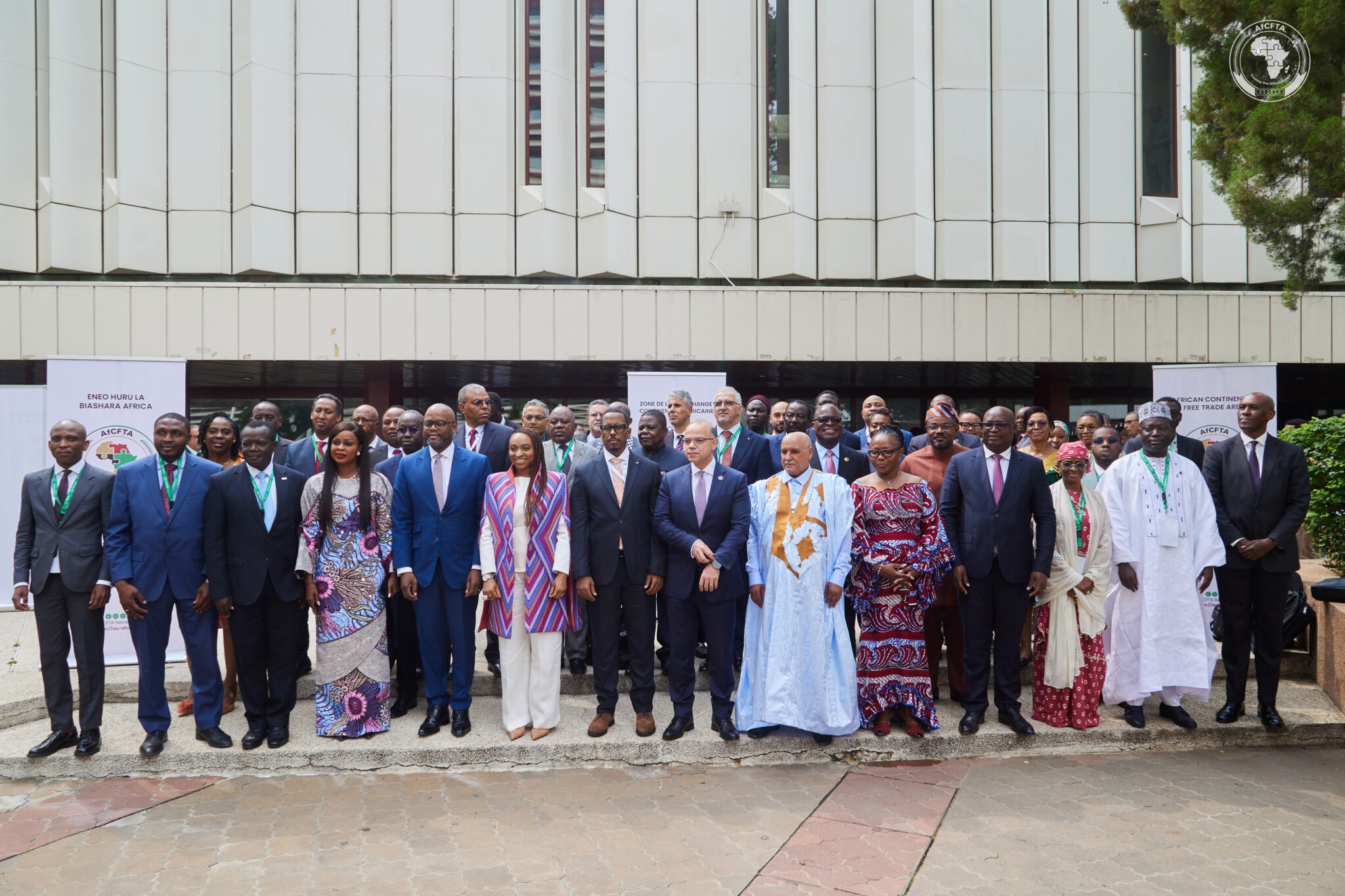
Accra, Ghana, 3 July 2026 — The African Continental Free Trade Area (AfCFTA) Council of Ministers Responsible for Trade concluded its 18th Meeting in Abuja, hosted by the Federal Republic of Nigeria, at a defining moment for the continental economic trajectory. With the Agreement’s legal architecture now substantially in place, the emphasis shifts decisively from negotiating the rules of African trade to making them work. In a deliberate strategic choice, Ministers placed implementation — and the delivery of measurable outcomes for African businesses and citizens — at the centre of the next phase of their work, as Nigeria took the baton of Chairpersonship of the Council from the Arab Republic of Egypt.
The Meeting followed an important milestone reached at the 39th Ordinary Session of the Assembly of Heads of State and Government in February 2026, which adopted a set of Annexes to the Protocol on Intellectual Property Rights and significantly advanced the Phase II agenda. A limited number of legal instruments remain under negotiation — notably an outstanding Annex to the Investment Protocol and a remaining Annex to the Protocol on Intellectual Property Rights — which State Parties are working to finalise.
Honourable Ministers situated the transition from negotiation to implementation within a rapidly evolving global trading environment — marked by geopolitical uncertainty, assaults on the founding principles of multilateral trade, the anti-competitive reshaping of global supply chains, and rising trade and investment protectionism. In that context, they underscored the strategic imperative of consolidating Africa’s own market, deepening regional value chains, and enabling the continent to engage global trade with a more coordinated voice.
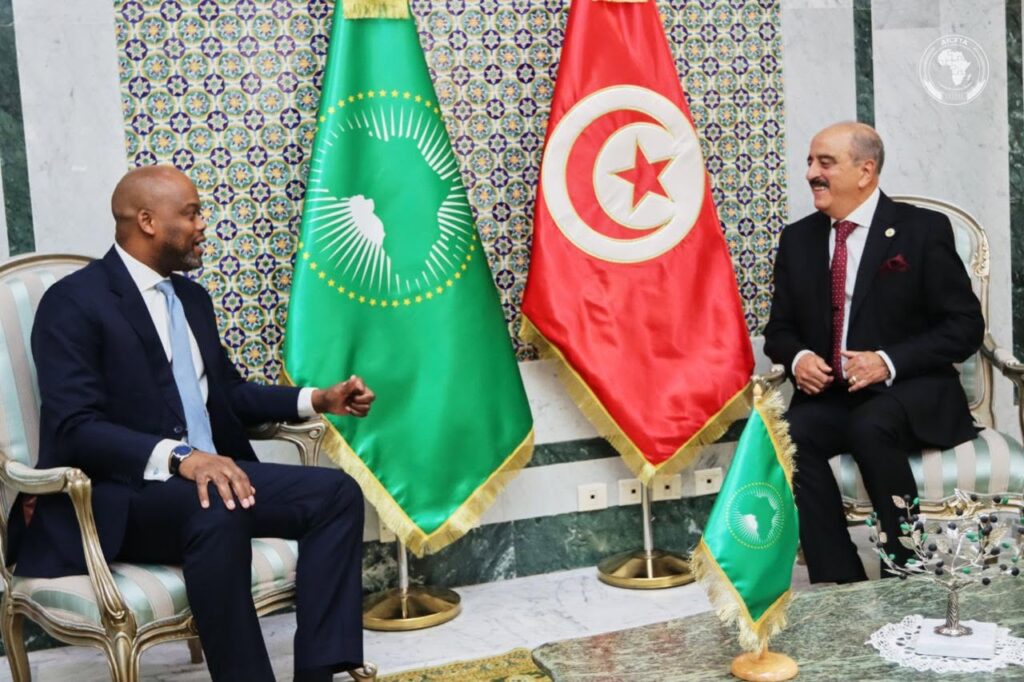
At the opening of the Meeting, H.E. Wamkele Mene, Secretary-General of the AfCFTA Secretariat, framed the task ahead as one of conversion — turning a formidable legal architecture into commercial reality for African enterprises and citizens.
“We have therefore entered a new phase of the Agreement, where the emphasis shifts from negotiating legal frameworks to accelerating implementation.”
He pointed to early evidence that implementation is already gathering momentum — including more than 12,000 Certificates of Origin issued under the Agreement and notified to the Secretariat as of March 2026, and a gradual but significant shift in African trade towards manufactured and agri-food products, away from primary commodities. He identified the early establishment of the AfCFTA Intellectual Property Office as a strategic priority for Africa’s innovation and knowledge economy — a domain in which Africa accounts for approximately 0.5% of global patent registrations — and reaffirmed the objective of full market liberalisation by 2030.
As outgoing Chair of the Bureau, Hon. Dr Mohamed Farid Saleh reflected on the progress achieved during Egypt’s tenure and offered a strategic benchmark for the phase ahead.
“The success of the Agreement can no longer be measured solely by the number of protocols adopted or legal frameworks established. Rather, it must be measured by our collective ability to translate these achievements into tangible economic realities.”
Assuming the Chairpersonship, Hon. Dr Jumoke Oduwole, MFR, Minister of Industry, Trade and Investment of the Federal Republic of Nigeria, set out a results-oriented agenda for the Bureau’s tenure, anchored on four priorities: accelerating implementation and moving decisively from commitments to action; strengthening regional value chains so that Africa trades more of what it produces; unlocking the transformative potential of digital trade; and expanding access to finance, particularly for women-led enterprises, youth entrepreneurs and MSMEs.
“Let us move from ambition to execution; from commitments to measurable outcomes; and from fragmented markets to one integrated and prosperous African market.”
Consistent with that agenda, the Council advanced the AfCFTA’s inclusive-trade framework, taking forward the Ministerial Regulation on Preferential Market Access for Women and Youth in Trade — designed to ensure that women-led enterprises, youth entrepreneurs and MSMEs secure commercially meaningful access to the continental market, pursuant to the directives of the AU Assembly of Heads of State and Government.
In the course of its deliberations, the Council considered and adopted the report of the 22nd Meeting of the Committee of Senior Trade Officials, together with the reports of the 15th Meeting of the Dispute Settlement Body and the 2nd Meeting of the Committee of Heads of Competition Authorities, and endorsed their recommendations to advance implementation — including work on the continent’s competition framework and institutions. The Council also received a report on the outcomes of the 39th Ordinary Session of the AU Assembly of Heads of State and Government, including the decision to negotiate a Protocol on Industrial Policy and Development and to pursue the continent’s collective engagement with third countries — at a time when Africa must guard against a renewed scramble for its vast and growing market. The Council of Ministers (COM) was attended by eight new Ministers representing Egypt, Gabon, Congo, Djibouti, Malawi, Togo, the Sahrawi Republic, and Seychelles.
The 18th Meeting closed on a shared strategic resolve: that the next chapter of the AfCFTA will be defined not by the instruments it has negotiated, but by the prosperity it delivers — a single African market that turns a maturing legal architecture into growth, industrialisation and opportunity for businesses and citizens across the continent.