Breaking News




Popular News


By Pa Modou Cham
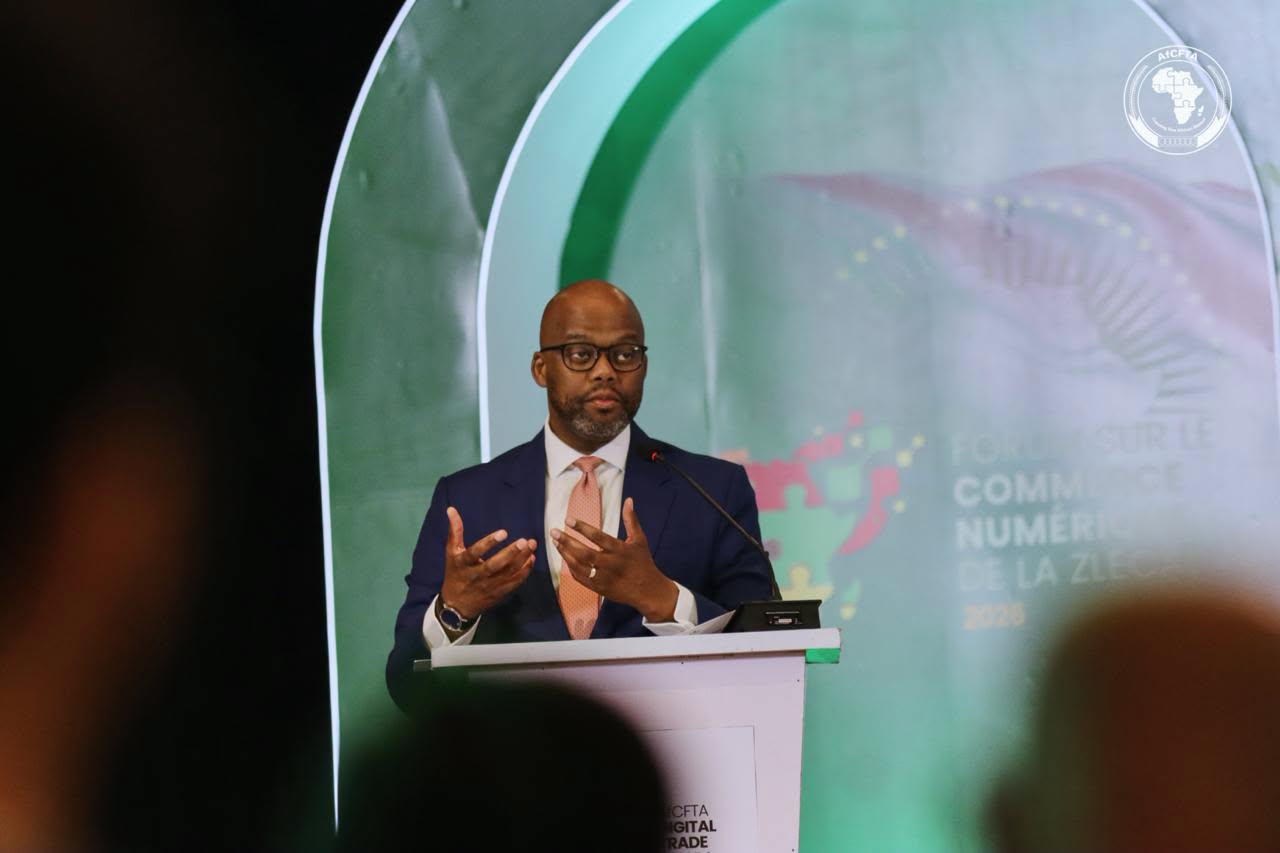
Africa is on the cusp of a digital trade revolution that could transform the continent into one of the world’s most dynamic economic powerhouses, AfCFTA Secretary-General Wamkele Mene declared Wednesday as he opened the Second AfCFTA Digital Trade Forum in Lagos, Nigeria.
Addressing ministers, policymakers, business leaders and technology innovators, Mene said the African Continental Free Trade Area’s Protocol on Digital Trade is poised to dismantle long-standing barriers to intra-African commerce and unlock unprecedented opportunities for businesses, particularly women, youth and small enterprises.
Held under the theme “Digital Trade for a Connected African Market,” the forum brings together key stakeholders to accelerate the implementation of Africa’s digital trade agenda.
“We are in the bustling, innovative city of Lagos, where the heart of African digital trade beats,” Mene told delegates, commending Nigeria for taking a leading role in advancing the Protocol on Digital Trade. He praised the country for becoming the first African nation to secure parliamentary approval for the protocol’s ratification and for serving as an AfCFTA Digital Trade Co-Champion alongside Kenya and South Africa.
Mene said Africa’s digital economy, currently valued at $180 billion, representing 5.2 percent of the continent’s GDP, is projected to soar to $712 billion by 2050, underscoring the immense potential of digital trade to reshape Africa’s economic future.
He argued that digital trade offers Africa an opportunity to overcome decades of fragmented markets and colonial-era trade structures that have historically made it easier for African businesses to trade with overseas markets than with neighboring countries.
“A trader in Lomé could reach Paris more easily than Lagos,” he observed, noting that cross-border digital payment systems such as the Pan-African Payment and Settlement System (PAPSS), together with Africa’s thriving fintech and mobile money sectors, are beginning to reverse that trend by making intra-African trade faster, cheaper and more accessible.
The Secretary-General emphasized that digital trade must be inclusive, ensuring that rural communities, women entrepreneurs and young innovators are not left behind. He acknowledged persistent challenges including uneven internet access, high data costs, fragmented regulations, cybersecurity concerns and digital literacy gaps, but described these as obstacles that can be overcome through coordinated continental action.
He called on African governments to harmonize digital trade regulations, invest in digital infrastructure, strengthen data governance and expand digital skills training to create a truly integrated continental digital market.
Highlighting Africa’s competitive advantages, Mene pointed to the continent’s vast renewable energy resources, abundant critical minerals, rapidly growing economies and youthful population. By 2050, he noted, Africa will be home to 40 percent of the world’s youth, presenting an unparalleled opportunity to build a globally competitive digital workforce.
He also revealed that the AfCFTA Secretariat is already translating policy into action through flagship initiatives such as the Africa Digital Access and Public Infrastructure for Trade (ADAPT), currently being piloted in Kenya, Morocco and Nigeria. The platform aims to integrate digital identities, payments, electronic trade documentation and secure cross-border data exchange into a unified digital trade architecture.
Additionally, Mene highlighted the AfCFTA Digital Inclusion and Entrepreneurship Programme (ADIEP), launched in partnership with Google, which is equipping 7,500 small and medium-sized enterprises across 19 African countries with practical digital trade and artificial intelligence skills to help them compete across borders.
As implementation of the Protocol gathers pace, the Secretary-General urged member states to ratify and domesticate the agreement while integrating digital trade into national development strategies. He stressed that governments, businesses and entrepreneurs must embrace digital platforms and artificial intelligence to reduce transaction costs, improve transparency and expand cross-border commerce under the AfCFTA framework.
“The implementation of the Protocol is imminent,” Mene said, calling for stronger public-private partnerships to build an inclusive digital ecosystem that ensures Africa not only participates in the global digital economy but shapes its future on its own terms.